
Scorecard and Author: Yining Zhao, ARE China Protein Transition (PT) intern
Reviewer and Methodology: Kate Blaszak, PT Director Dave Luo, PT Manager
PLANT-BASED DAIRY |
Walmart |
Wumei |
Olé |
RT-Mart |
Yonghoi |
Chaoshita |
Metro |
Freshippo |
Sam’s Club |
fudi |
||
| Availability | 1.01 | Is the product offered? |
✓ |
✓ |
✓ |
✓ |
✓ |
✓ |
✓ |
✓ |
✓ |
✓ |
| 1.02 | Are there multiple options available? |
✓ |
✓ |
✓ |
✓ |
✓ |
✓ |
✓ |
✓ |
✓ |
✓ |
|
| 1.03 | Does the supermarket offer the product under its home brand? |
✓ |
✓ |
✓ |
✕ |
✓ |
✕ |
✓ |
✓ |
✕ |
✕ |
|
| Pricing | 2.01 | Is there price parity? |
✕ |
✕ |
✕ |
✕ |
✕ |
✕ |
✕ |
✕ |
✕ |
✕ |
| 2.02 | Is the price disparity less than 20%? |
✓ |
✓ |
✕ |
✕ |
✕ |
✕ |
✕ |
✓ |
✓ |
✕ |
|
| Placement | 2.01 | Is there in-store marketing in favour of the product? |
✓ |
✕ |
✓ |
✓ |
✕ |
✓ |
✓ |
✓ |
✕ |
✓ |
| 2.02 | Is the product placed besides its animal protein counterpart? |
✓ |
✕ |
✓ |
✓ |
✕ |
✓ |
✓ |
✓ |
✕ |
✓ |
PLANT-BASED MEAT | Walmart | Wumei | Olé | RT-Mart | Yonghoi | Chaoshita | Metro | Freshippo | Sam’s Club | fudi | ||
| Availability | 1.01 | Is the product offered? | ✕ | ✕ | ✕ | ✕ | ✕ | ✕ | ✓ | ✕ | ✕ | ✕ |
| 1.02 | Are there multiple options available? | ✕ | ✕ | ✕ | ✕ | ✕ | ✕ | ✕ | ✕ | ✕ | ✕ | |
| 1.03 | Does the supermarket offer the product under its home brand? | ✕ | ✕ | ✕ | ✕ | ✕ | ✕ | ✕ | ✕ | ✕ | ✕ | |
| Pricing | 2.01 | Is there price parity? | ✕ | ✕ | ✕ | ✕ | ✕ | ✕ | ✕ | ✕ | ✕ | ✕ |
| 2.02 | Is the price disparity less than 20%? | ✓ | ✓ | ✕ | ✕ | ✕ | ✕ | ✕ | ✓ | ✓ | ✕ | |
| Placement | 2.01 | Is there in-store marketing in favour of the product? | ✕ | ✕ | ✕ | ✕ | ✕ | ✕ | ✕ | ✕ | ✕ | ✕ |
| 2.02 | Is the product placed besides its animal protein counterpart? | ✕ | ✕ | ✕ | ✕ | ✕ | ✕ | ✕ | ✕ | ✕ | ✕ |
CAGE-FREE EGGS | Walmart | Wumei | Olé | RT-Mart | Yonghoi | Chaoshita | Metro | Freshippo | Sam’s Club | fudi | ||
| Availability | 1.01 | Is the product offered? | ✕ | ✓ | ✓ | ✓ | ✕ | ✓ | ✓ | ✓ | ✓ | ✓ |
| 1.02 | Are there multiple options available? | ✕ | ✓ | ✓ | ✕ | ✕ | ✓ | ✕ | ✕ | ✕ | ✕ | |
| 1.03 | Does the supermarket offer the product under its home brand? | ✕ | ✓ | ✓ | ✕ | ✕ | ✕ | ✕ | ✓ | ✕ | ✕ | |
| Pricing | 2.01 | Is there price parity? | ✕ | ✓ | ✕ | ✕ | ✕ | ✓ | ✕ | ✕ | ✕ | ✕ |
| 2.02 | Is the price disparity less than 20%? | ✕ | ✓ | ✕ | ✓ | ✕ | ✓ | ✕ | ✕ | ✕ | ✕ | |
| Placement | 2.01 | Is there in-store marketing in favour of the product? | ✕ | ✕ | ✓ | ✕ | ✕ | ✕ | ✕ | ✓ | ✕ | ✕ |
| 2.02 | Are cage-free / higher-welfare claims supported with independent certification | ✕ | ✕ | ✓ | ✕ | ✕ | ✕ | ✓ | ✓ | ✕ | ✕ |
Figure 1: Summary of our findings at Beijing supermarkets.
Executive summary
With a population of more than 22 million, Beijing is one of the largest metropolitan consumer markets in the world. As a city that blends traditional food culture with rapidly developing modern retail, China’s capital presents a valuable opportunity to analyse how supermarkets are shaping the future of protein choices.
Our on-the-ground study of the city’s major supermarkets found that retailers are taking initial steps toward responsible and sustainable proteins, but progress is limited. Plant-based milk is common yet poorly positioned, plant-based meat is barely present, and cage-free eggs are widespread but lack clear promotion and ideally certification.
Consumers on average take eight seconds or less to choose products in supermarkets. Marketing studies show that product labeling, placement, price, and promotion can help optimise sales.1 By deploying these tools, retailers have a clear pathway to take stronger action to guide consumers towards a responsible and sustainable protein transition in China.
Retailers who act early can position themselves as leaders and build stronger brands.
There is also an opportunity for retailers to align with investor expectations and policy guidance, whereby China is encouraged to diversify its protein consumption, including substituting 10% of pork and beef with plant-based meats by 2035.2 In Asia, more investors are asking companies to report how they manage environmental and social risks related to meat, dairy, seafood and eggs.
Retailers in China who act early can position themselves as leaders, build stronger brands, and prepare for a more sustainable future.
Methodology
Our assessment of 10 major supermarket brands in Beijing entailed 18 physical store visits, covering diverse districts and consumer groups. We reviewed how retailers are integrating three key product types into their strategies: plant-based milk, plant-based meat, and cage-free eggs – using the “4Ps” marketing parameters: product, placement, price, and promotion in-store.
Key findings
While we observed some encouraging developments, most retailers have yet to fully embrace their opportunity to support the transition to a more responsible and sustainable protein system in China.
Plant-based milk
China has a long history of consuming plant-based protein products, especially in the form of beverages such as soy milk. However, this cultural familiarity does not automatically translate to widespread dairy milk substitution.
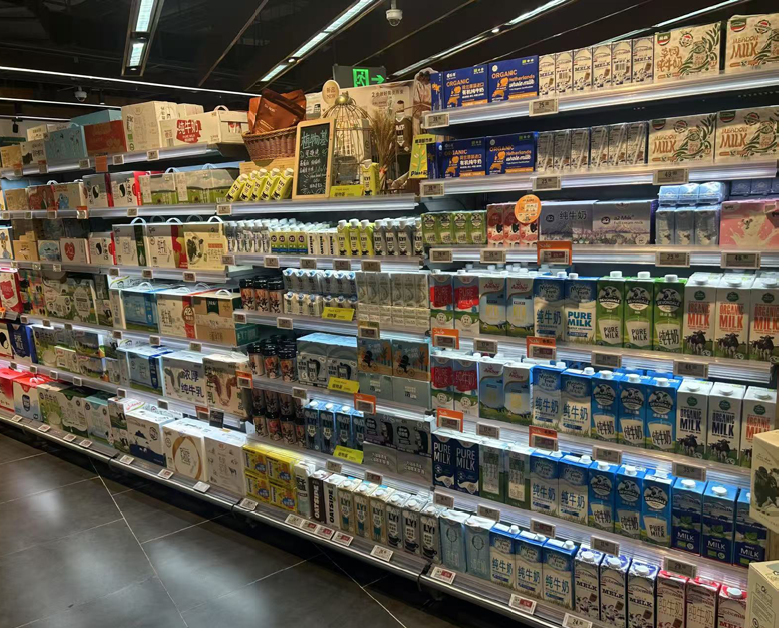
We found plant-based milk in the outlets of all 10 supermarket operators, with six offering own-brand products. A wide variety of sources was available, including soy, almond, and coconut, but marketing of traditional Chinese products such as soy milk and almond dew continues to be based on taste and heritage, rather than as dairy alternatives and innovation. In contrast, imported products such as coconut and oat milk, often from international brands like Oatly, were positioned more clearly as “plant-based” or “lactose-free” options, highlighting their role as milk replacements.
Most retailers still position plant-based milk as a lifestyle drink rather than a replacement.
Plant-based meat

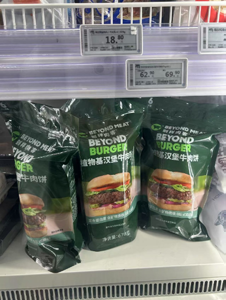
Low presence, high cost, and placement indicate committment to plant-based meat is still uncertain.
Cage-free eggs

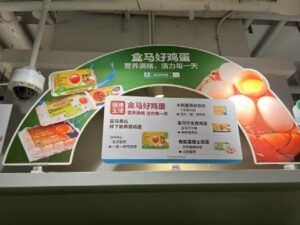
Freshippo.
Cage-free eggs were found in eight out of 10 supermarket brands surveyed. Products largely came from a small pool of brands, including own-label options and commercial players such as Happy Egg and Shendan.
However, promotion and certification practices varied. Certified products were consistently more expensive, while lowerpriced options often displayed cage-free claims without any clear third party verification. Only two retailers promoted certified cage-free products through in-store displays, both of which were tied to their own-brand ranges.
These inconsistencies risk decreasing consumer trust and present challenges to building awareness of higher-welfare production standards. Although there is growing interest in animal welfare among Chinese consumers, especially in urban areas, poor labelling and understanding hinders choice, so cage-free eggs appear to remain poorly communicated and insufficiently supported at the point of sale.3 Without standardised categorisation, clear labelling, pricing consistency, and consumer engagement, the potential for market expansion remains untapped.
Cage-free eggs are quite common in the market, but placement, promotion and pricing are highly variable and need retailer support to help drive uptake.
Analysis and outlook
Overall, the findings reflect that China remains in an early and fragmented phase of the protein transition.
Plant-based milk is culturally familiar but weakly positioned as a healthy, nutritional substitute. Plant-based meat has barely entered the mainstream retail landscape. Cage-free eggs are present but affected by a lack of robust certification and limited investment in instore promotion.
Among the assessed retailers, only a few with international affiliations demonstrated a more proactive approach, including dedicated product zones and clearer messaging around sustainability and welfare attributes. These examples show what can happen when retailers take simple, practical marketing steps.
Retailers can take simple, practical marketing steps to accelerate the protein transition.
An opportunity and responsibility for retailers
Retailers in Beijing have the power to shape the future of protein consumption in China. By treating sustainable proteins as part of their core strategy rather than as niche products, they have an opportunity to shift the market in meaningful ways.
Their role extends far beyond deciding whether a product is placed on shelves. Retailers can influence how consumers understand sustainable proteins through key decisions such as where to place products, how to label and price them, and how to promote them. Furthermore, they can use their leverage with suppliers to encourage independent certification for cage-free eggs or other higher-welfare practices, building trust among consumers and helping them make informed choices.
Treating sustainable proteins as a core strategy can have a meaningful market impact.
Retailers are typically the first point of contact for consumers who may not yet know the difference between conventional and sustainable products, and currently many products are marketed as lifestyle or premium items rather than as part of daily protein intake, limiting their mainstream appeal and long-term influence on consumer habits.
They can follow the example of leading retailers by building and showcasing sustainable “home-brand” products to better manage these factors.
Retailers can align with investor and policy expectations by making key changes.
Through simple in-store materials and signs, or prompts on digital platforms, retailers can be more proactive in education, helping consumers understand why these products are critical for health, the environment, and animal welfare.
Future progress in China should synchronise with a wider regional vision. The Asia Protein Transition Platform has already published investor-backed corporate disclosure guides and a 2030 Protein Transition Vision. These tools can help Chinese supermarkets move closer to this vision by setting clear policies on plant-based and higher-welfare products, reporting on progress, and engaging with suppliers.
By making key changes, Chinese retailers can align themselves with the expectations of investors, responsible consumers, and policy guidance. In Asia, investors are increasingly asking companies to report on how they manage animal welfare, deforestation, and antimicrobial resistance risks.
Retailers who act early in China can position themselves as leaders, build stronger brands, and prepare for a future where sustainability will be a basic requirement, not an option.
Footnotes:
1. https://gfi.org/resource/plant-based-meat-pricing-and-promotion-insights-in-us-retail/
2 https://cgspace.cgiar.org/server/api/core/bitstreams/c1a434e7-67f6-4288-8063-1d1ebfa54adb/
content
3. https://academic.oup.com/af/article/13/1/34/7052110
Founded in 2013, ARE is headquartered in Singapore with an additional office in Beijing and a presence in India and Japan. For more about ARE’s Protein Transition programme, click here.

