
Contributed by: Kate Blaszak, Director – Protein Transition/Sustainable Food Systems, ARE
A perfect storm on our plates
This Friday is World Food Day, and the UN Food and Agriculture Organization (FAO) has chosen a fitting theme: “Innovate today. Nourish tomorrow.”1 Three weeks later, governments gather in Antalya, Türkiye for COP31. Both moments point to the same truth: the way we produce protein is colliding with the limits of land, water, climate, and public health, and Asia sits at the centre of that collision. The numbers are stark. In 2025, 645 million people went hungry, 292 million of them in Asia, while around 2.7 billion people could not afford a healthy diet.2 At the same time, diet-related non-communicable diseases are peaking in Asia. Yet the system that’s failing people is far from lean. Livestock occupies about 77% of the world’s farmland but supplies only 18% of its calories and 37% of its protein.3 Agriculture accounts for around 70% of global freshwater withdrawals.4 There is a prevailing cognitive dissonance. The world is embracing electric vehicles but our food system runs on fossil fuels. The synthetic nitrogen fertiliser supply chain alone produces about 2.1% of global greenhouse gas emissions.5 Because fertiliser is made using natural gas, its price moves almost in lockstep with gas markets, so every energy shock becomes a farm cost and food-price shock, and many parts of Asia have been acutely impacted.6 Meanwhile, roughly one-fifth of food available to consumers, about 1.05 billion tonnes, is wasted, and food loss and waste generate 8–10% of global emissions.7 It’s a self-perpetuating spiral of decline. Feed crops drive land clearing and biodiversity loss. Heat and drought hit crops and herds alike. Intensive animal production concentrates the risks of zoonotic disease and antimicrobial resistance, and keeps billions of animals in conditions few consumers would choose to see. The costs hit smallholders, workers and low-income households hardest; the very people the system claims to feed. FAO’s recent Extreme Heat and Agriculture report is already soberly summing the impacts of heat stress and disaster on people, planet, and especially animals. It emphasises the limitations of adaptation and the essential need to remain focused on mitigation. Even if fossil fuel emissions stopped tomorrow, current trends in food system emissions alone would put the 1.5°C goal out of reach, and even threaten 2°C.8The solution is to transform the system
Innovation is certainly part of the solution. The question is what we innovate for. Too much capital still flows into technologies that make the existing system faster and cheaper: more “climate-smart” (or “precision livestock”?) tweaks, emissions-reducing feed or soy replacers, more fertiliser, more intensive animal production, more cheap meat and now trending “high protein” dairy products. But all these innovations do is buy a few more years for a model that is running out of land, water, and climate headroom, while inefficiently failing to feed those in need.
The opportunity lies not in “high protein” but in highly diversifying protein so that supply is decoupled from climate, resilient to heat and drought, and better for people, planet, and animals. Three technology pillars matter, and Asia already leads in parts of each.
- Fermentation. Microbes can produce protein, fats, and functional ingredients in tanks, using a fraction of the land. China approved its first mycoprotein in 2025, and Angel Yeast opened a plant able to produce 11,000 tonnes of fermentation-derived protein a year. 9 Yet the region still trails on fermentation patents, which makes this the clearest gap for investors.10
- Cultivated meat. Singapore gave the world’s first approval in 2020.11 Australia followed in June 2025, and China’s Joes Future Food has built a large-scale cultivated pork facility. 9 South Korea now has the region’s most cultivated meat startups, and a new law backs plant-based, fermentation, and cultivated foods.10
- Plant proteins. This is the most mature pillar, but it still needs innovation for better taste, texture, nutrition, and price to meet mainstream expectations. For now, traditional plant proteins offer the best value, but fermentation-derived ingredients are also a hybrid lever for the future.
On-ramps to the mainstream market
The winners of the protein transformation will draw consumers on price, taste, and convenience. Several on-ramps are already working:
- Price parity and fortification. Lidl has cut plant-based prices to match or undercut animal equivalents in several markets.12 Fortified plant milks and meats show how nutrition gaps such as calcium, B12, and iron can be closed cost effectively. Leading manufacturers lead by design.
- Blended products. Lidl Netherlands now also sells mince made of 60% beef and 40% pea protein. It costs about one-third less than beef mince and carries a 37.5% smaller carbon footprint. Lidl aims for plant proteins to make up 60% of its protein sales by 2030.12 Blending reaches meat eaters without asking them to give anything up. Leading retailers set and drive targets.
- Smarter sourcing and menus. Asia does not need to import a protein culture. Tofu, tempeh, dal, mung bean, chickpea, and many other traditional proteins are affordable, familiar, and nutritious. Food service, retail and manufacturers can feature them more creatively and engineer into existing menus.
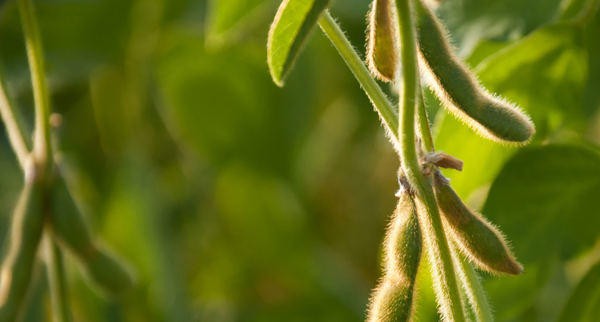
- Farming that pays twice. Legumes are more inherently climate resilient, and fix their own nitrogen, cutting fertiliser costs and exposure to gas markets. Built into rotations and integrated cropping, they strengthen soils, diversify farm income and build drought resilience, while providing a low-cost, fibre-rich traditional or concentrated protein source.
For banks and investors, this is not charity. It is risk management and growth. Every tonne of protein that does not depend on imported feed, gas-priced fertiliser or climate-exposed herds is a more resilient asset.
The ask: invest now, with the future in mind
The pressures on our food system will only intensify: more mouths, more heat, scarcer water, and volatile input costs. Nutritional security and climate safety are both under threat. Waiting is the most expensive and riskiest option.
Governments, companies, and financial institutions across Asia are facing an urgent action checklist:
- Invest now in transformative protein technologies rather than tools that lock in more resource-intensive, high-impact meat.
- Put protein diversification into transition plans, lending criteria, and climate risk scenarios.
- Back alternative protein innovation and infrastructure, open-access R&D, and shared pilot facilities so the best start-ups or solutions can scale.
- Fund farmers to upskill or transition to grow food-quality legumes or diversify, so they share the upside rather than carry the cost.
Endnotes
- FAO, World Food Day 2026 theme “Innovate today. Nourish tomorrow.” — Geneva Environment Network; TABLE / FAO Science and Innovation Forum 2026
- FAO, IFAD, UNICEF, WFP and WHO, The State of Food Security and Nutrition in the World 2026 — summaries via JIRCAS and Drishti IAS
- Our World in Data, based on Poore & Nemecek (2018), Science — Global land for agriculture; WEF summary
- FAO, The Turquoise Nexus Initiative (COP31)
- Menegat, Ledo & Tirado (2022), “Greenhouse gas emissions from global production and use of nitrogen synthetic fertilisers in agriculture”, Scientific Reports 12:14490 — PMC
- Heinrich Böll Stiftung, Nitrogen fertiliser: global dependencies
- UNEP & WRAP, Food Waste Index Report 2024 — IISD SDG Knowledge Hub
- Clark et al. (2020), “Global food system emissions could preclude achieving the 1.5° and 2°C climate change targets”, Science 370:705–708 — Oxford Martin School
- GFI APAC, 2025 Report Card + 6 Things to Watch in 2026
- GFI APAC, Korea overtakes Singapore as APAC’s cultivated meat startup epicentre
- Just Food, Protein pioneers: the countries which have approved cultivated meat
- ProVeg International, Dutch Lidl cuts cost of plant-based foods, makes minced meat partly plant-based; vegconomist
- FAO, UNDP & UNEP (2021), A multi-billion-dollar opportunity: Repurposing agricultural support to transform food systems — UNEP
- CGIAR, Progress slows on Sharm el-Sheikh Joint Work
- C2ES, Halfway to COP31: Why the Bonn Climate Meeting Matters
- FAO-WMO (2026), Extreme heat and agriculture

